
The Best AI Cold Calling Agents Right Now
AI voice agents have quietly gone from clunky robocallers to genuinely useful sales teammates. Here are the AI cold calling platforms leading the pack, plus what to watch out for before you let one loose on your leads.
7 Sep 20265 min read
Also worth a look
Cold calling is one of those jobs almost nobody loves. It is repetitive, morale-sapping, and most calls end in under thirty seconds. Which is precisely why it has become one of the most interesting growth areas in applied AI: if a machine can handle the first ninety seconds of a conversation well enough to qualify a lead or book a meeting, the economics of outbound sales change completely.
What has changed recently is quality. The current generation of AI voice agents holds natural, two-way conversations; they pause, handle interruptions, answer basic questions, and know when to hand over to a human. They are not perfect, and they are not right for every business, but the best of them are now genuinely impressive. Here are the platforms leading the way, plus a few things worth knowing before you deploy one.
What separates a good AI caller from a bad one
Three things, mostly: latency, interruption handling and hand-off. If the agent pauses too long, people hang up; if it talks over an objection, people hang up; and if it cannot pass a warm lead to a human quickly, you waste the conversation you just paid for. Judge every platform below on those three points before you look at the price list.
 Close (Chloe)
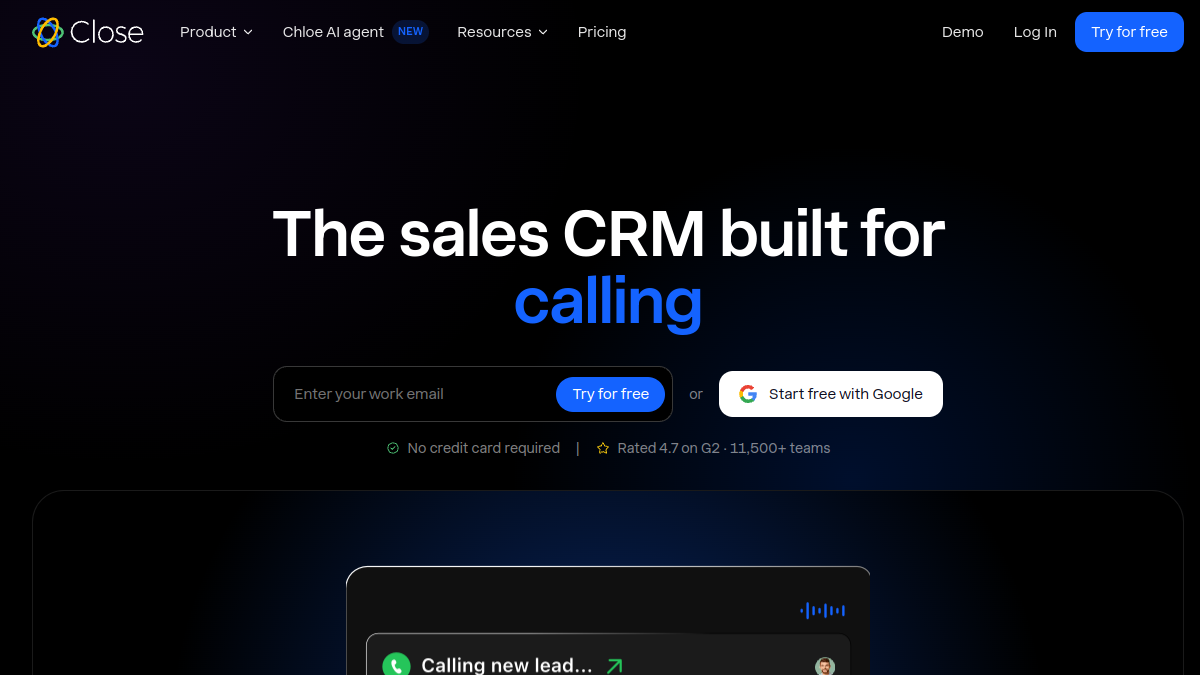
Close is a sales CRM built for small teams, and Chloe is its AI calling agent. Because it lives inside the CRM, the agent already knows the lead, logs the call, updates the record and books the meeting without any integration work.
- Best for: SMB sales teams who already want a CRM and calling in one place
- Strengths: zero-glue setup, call recordings and transcripts in the lead record, human handover
- Watch out for: less low-level control over the voice pipeline than developer platforms
See Close on Slick Media · Visit Close (Chloe)
 Vapi
Vapi
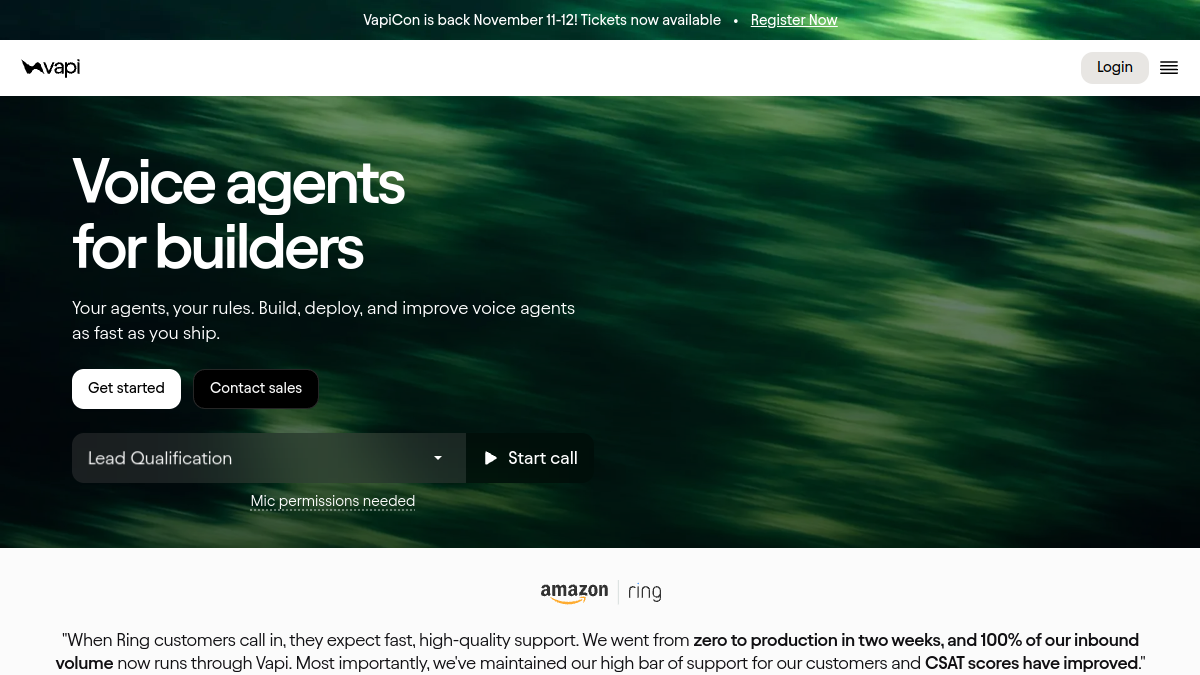
Vapi is the platform of choice when you want to design the voice agent yourself. You pick the speech, language and telephony components, then orchestrate them, which gives excellent latency and a very natural feel when it is tuned well.
- Best for: high-volume teams with someone technical to own the build
- Strengths: very low latency, model choice, deep call-flow control
- Watch out for: it is a toolkit, not a turnkey product; budget setup time
 Synthflow
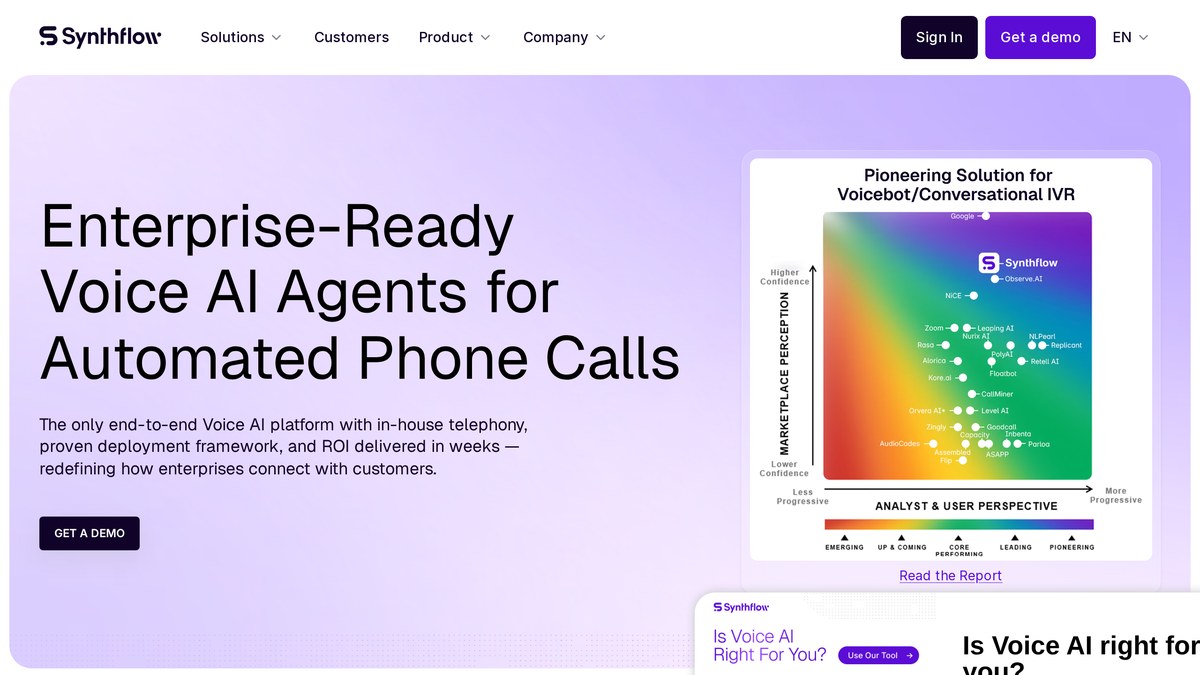
Synthflow sits in the sweet spot between no-code and full control. You build agents visually, connect a calendar and CRM, and go live in an afternoon, with decent guardrails for scripts and objection handling.
- Best for: growth teams that want results this week, not next quarter
- Strengths: visual builder, ready-made templates, straightforward integrations
- Watch out for: heavily customised flows can get fiddly to maintain
 Bland
Bland
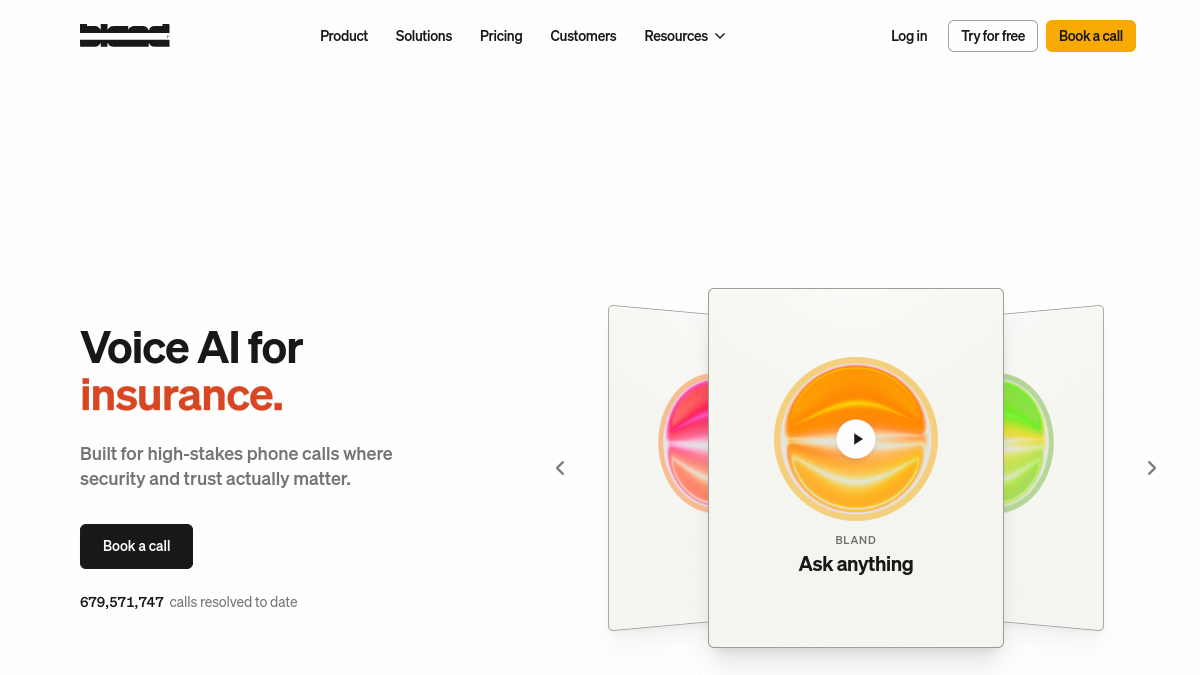
Bland is an API-first calling platform aimed at engineering teams. You describe the agent, wire in your own logic, and run calls at scale with fine-grained control over pathways and transfers.
- Best for: product and engineering teams embedding calling in their own app
- Strengths: predictable pricing at volume, conversational pathways, self-hosted-feel control
- Watch out for: expect to write code; not a sales-team-ready dashboard
 Retell
Retell offers a well-documented API plus a usable dashboard, which makes it a good middle path: developers get control, while sales managers still get transcripts, analytics and call review in a browser.
- Best for: teams wanting developer control with a manager-friendly front end
- Strengths: clean docs, call analytics, quick prototyping
- Watch out for: costs climb quickly if you do not tune call length
 Nooks
Nooks

Nooks takes the opposite approach: instead of replacing the rep, it makes the rep faster. Its AI dialer skips voicemails and bad numbers, so a rep spends their hour talking to humans rather than listening to rings.
- Best for: teams who want more conversations without handing calls to a bot
- Strengths: big lift in connect rates, coaching and call review, easy compliance story
- Watch out for: you still need reps on the phone, so it is not a headcount saver
 Orum
Orum

Orum is the other strong human-in-the-loop option, a parallel dialer with live conversation detection that connects the rep the moment a real person answers. It is a favourite of managers who want more at-bats per day.
- Best for: outbound teams focused on activity and connect-rate metrics
- Strengths: parallel dialing, live floor feel for remote teams, clean reporting
- Watch out for: parallel dialing needs careful configuration to stay compliant
The compliance bit (do not skip this)
AI calling is regulated, and the rules differ by country and state. In the US, the FCC has confirmed that AI-generated voices fall under the TCPA’s restrictions on artificial calls, which means prior express consent is required for marketing calls to mobiles in most cases, and several states have their own disclosure rules. In the UK and EU, GDPR and PECR apply, and Ofcom has been tightening its stance on silent and abandoned calls. Practically: tell people they are speaking with an AI, honour opt-outs instantly, scrub against do-not-call registers, and get proper legal advice before scaling up. Every serious vendor above has compliance tooling, but the responsibility ultimately sits with you.
The bottom line
AI cold calling has crossed the line from gimmick to genuine leverage. For most SMB sales teams, Close with Chloe is the standout starting point, because the CRM-native approach removes nearly all the friction. High-volume operations ready to invest in setup should look hard at Vapi and Synthflow, and engineering-led teams wanting full control should evaluate Bland and Retell. And if you would rather keep humans on the phone and simply make them ten times more efficient, the Nooks and Orum generation of AI dialers is arguably the safest bet of all.
Whichever route you take, start with a narrow pilot, one lead list and one clear success metric, and let the numbers decide. This space is moving fast, and we will keep this guide updated as it does.
 TikTok · Member offerReach buyers before you dialWarm your pipeline with TikTok for Business ads.See the offer